If you are familiar with my reviewing practices, I like to give my bottom line up front (BLUF) then dissect it in detail. My BLUF for 13 Reasons Why (both the Netflix series and book) is that I loved them and hated them, simultaneously. In either case, I recommend reading/watching to explore your own opinions. You will love them, or hate them, if not both. And in either case, I think it is a topic that belongs in our media so that it can be discussed and approached more openly.
And now to it…
Anyone who knows me, in both the real and virtual worlds, probably knows how I feel about suicide. I survived my own mediocre attempt as a child; then I plunged into self-destruction and self-harm as a teenager. I lost my way, disappeared into my own darkness.
Since recovering from that entire period, I have been very verbal about my experiences. I inadvertently ended up talking to hundreds of high school students on how I dove into writing after I failed to kill myself, how I used the words to drag me through and out of self-destruction and depression. Maybe it is because I am a writer and that makes it compulsive; maybe it is because I never want anyone to feel alone in that place the way I did.
Suicide is a topic very close to my heart. More than my own experiences (because, like I said, my attempts were fledgling then indirect), I have collected a volume of stories on the subject. After I wrote How to Kill Yourself Slowly, I received hundreds of emails from suicidal people. With many, we connected. They told me their pain and all the things that brought them there. We talked about what it was like to be in a place where you wanted to die. And they imprinted on me. All of them. The details are now an amalgamation in my unreliable memory, but I feel them still.
With my own pain and the others’ branded on the soft tissue inside of me, I am judgmental on the subject. I have so many perspectives to weigh the portrayal against. I admit I hold a certain set of expectations. Yet I always devour the media with ravenous curiosity because, in truth, even if you do not succeed in dying, you never fully leave that place. You always have one foot, one toe maybe, left lingering in those twisted shadows.
I live in the city with the highest teen suicide rate in the nation. Chris Cornell just killed himself. This is real. This is a thing in our culture.
I know the topic of suicide gets people all jumpy. It’s ugly; it’s uncomfortable; it’s taboo. Maybe it should not be. Maybe if it was not such a secret, people would not suffer in secret. Maybe if we talk about suicide, write about suicide, watch about suicide, we won’t inspire more suicide; we will instead invite conversation about it. Conversation that could save some lives.
In any case, I approached 13 Reasons Why with mixed feelings. Were they going to do it justice? Were they going to glamorize the idea of taking your own life? Were they going to trivialize and mainstream it? Was it going to be stupid? Yet I resolved to indulge with an open mind. Here are my experiences and impressions of it. Spoiler free, so much as I can help it.

Watching 13 Reasons Why
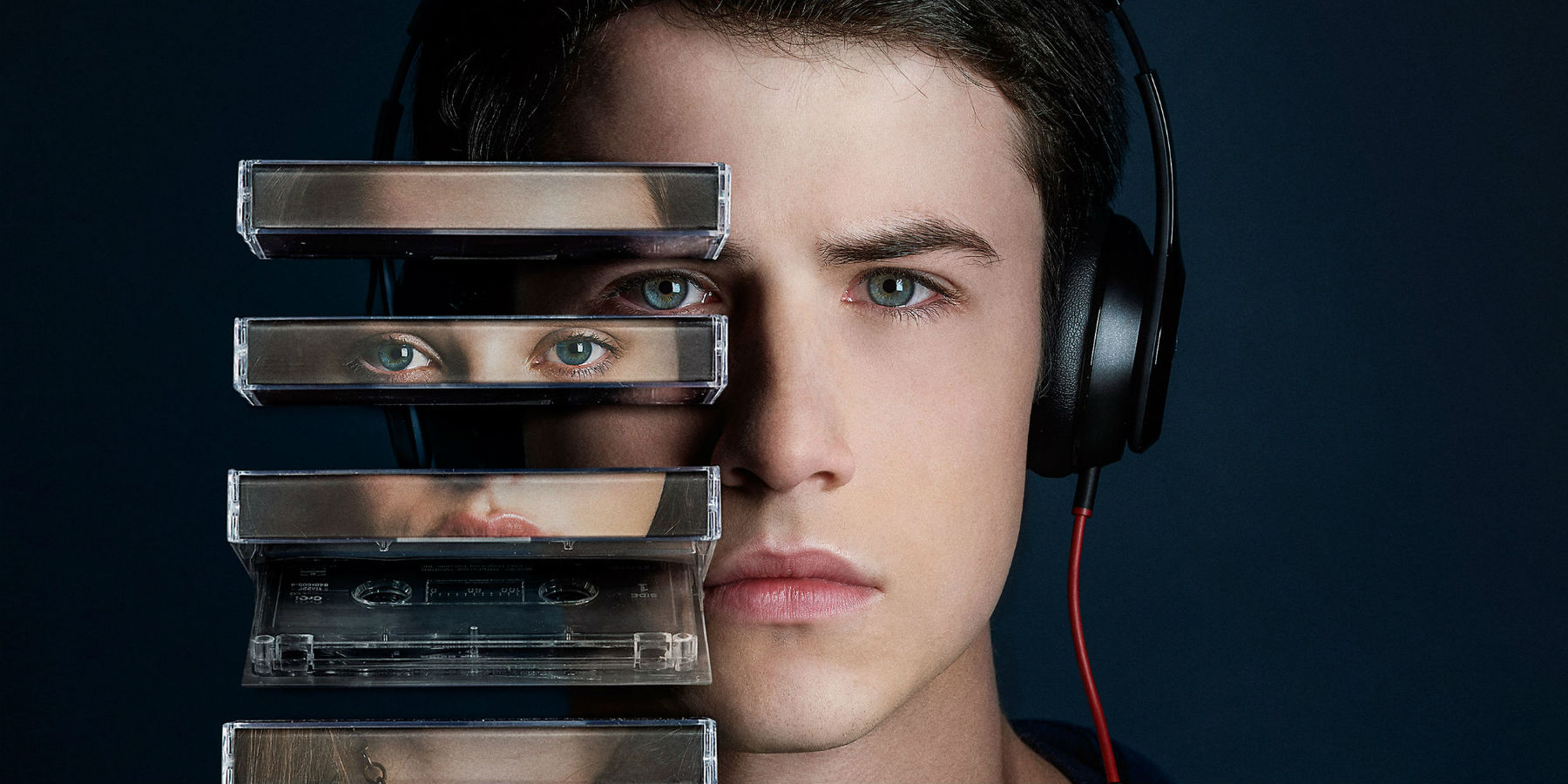
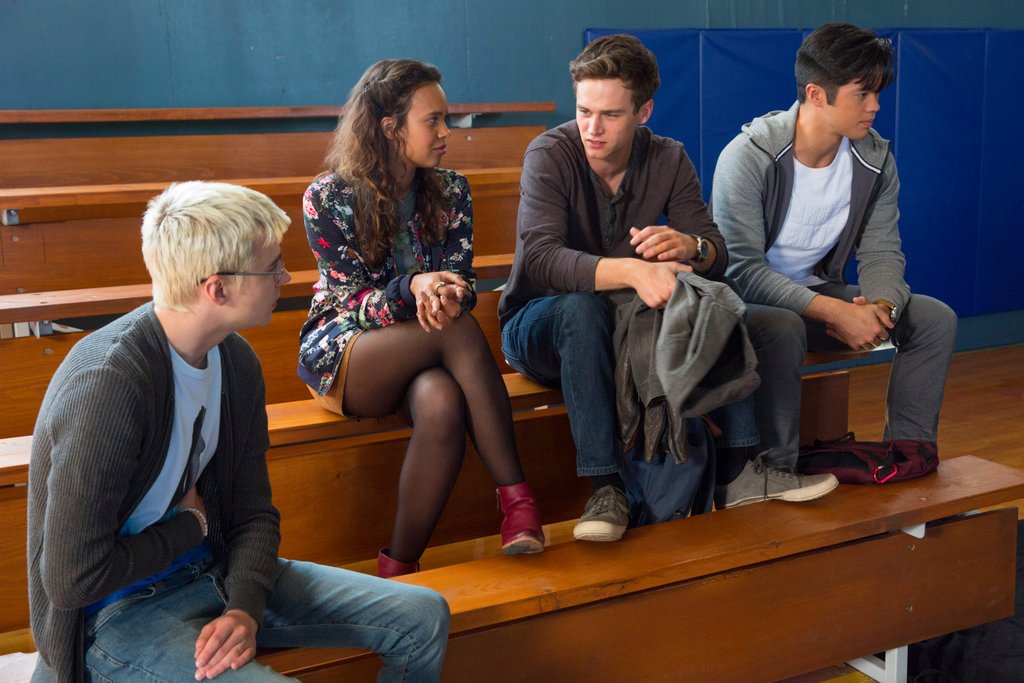
In case you have managed to miss the buzz about the Netflix series, 13 Reasons Why is a series about a high school girl (Hannah) who kills herself and leaves 13 audio cassette tapes detailing the “13 reasons” why she committed suicide. Each tape centers on one perpetrator, and the tapes are passed from person to person, with an ominous shepherd hovering in the peripheral. The series follows one person (Clay) as he listens to his tapes to discover his role in Hannah’s death.

Initially, the series had me with suspense. The premise is fascinating.
“We’ll never know why they did it.”
“If they decided to end their life, nothing anyone did could really stop them.”
I have heard this sort of rhetoric around every suicide I have been near, at the funeral I attended. That is what suicide leaves: a wake of questions, doubts, blameshifting, and guilt. But what if you could know? What if someone filled 13 sides of audio tapes with the detailed story of why?
In addition to the sheer curiosity generated by such a story, experiencing the tapes with Clay personalizes the narrative. I wanted to know why he, a seemingly decent if not oblivious kid, had made such a list. I wanted every episode to be his. And so, instead of sleep, I clicked Next Episode and Next Episode…
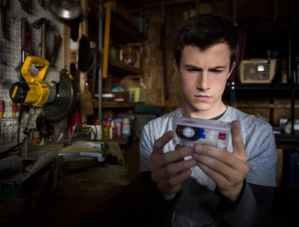
As Hannah began to unravel her tale of woe, I found my mixed feelings resurfacing. I definitely connected and empathized deeply with Hannah. I was undoubtedly enthralled to find out how she could decide to meet her end. Yet, near the middle of the season, the pace began to lag. The offenses and perpetrators became increasingly “high school” and less shocking and upsetting. It almost felt as if Hannah (or the writers) was groping for more to blame. However, at the end, with the full picture in sight, it did make more sense, and it became clear that all the pieces were in fact very necessary. They were contributing factors.
What ultimately seduced me over were the characters. Most notably, how flawed the characters are. Not a single character, not even Hannah, is simply good or only bad. They are each complex and confused and contradictory. They struggle and falter the way we all do, especially at that awkward and vulnerable high school age. I appreciated that the story showed how many mistakes Hannah made, how she contributed to her problems, how she made it difficult and sometimes impossible to help her.
I know that was what a suicidal me was like.
Hannah struggled; Clay struggled. At one point or another, I loved, hated, sympathized with, cursed, felt sorry for each character (except maybe two). It felt real, and reality was what this story demanded.
Once a certain turning point in the story happened, the plot captivated me once more. I was sacrificing sleep once more. I learned with Clay, perhaps as slowly as Clay, how all these many factors amassed to crush Hannah. And my heart broke for her when that killer blow was dealt.
Watching Hannah’s suicide was brutal. I cried. Like ugly, hysterical, soul crying. I was that 12 year-old girl again; I was that 17 year-old girl again. I was wrapped back up in that darkness that so many times almost pulled me under. And it was strange how comforting it felt. The scene was beautiful in just how viscerally terrible it was.
I can honestly say that my opinion is that the series did not glamorize suicide. Hannah is not shown as this perfect, innocent victim. She is not authentically worshiped as she is mourned after her death. People still hate her; people still talk vicious shit about her. Her parents’ agony is palpable. The show examines more the negative consequences for the people left alive than it depicts her being liberated from her strife.
Instead, my chief complaint is that the anti-bullying propaganda is both belabored and irritating, like being assaulted with the idea. The message is applied far too thickly and unnecessarily as if the show’s creators needed to have it to make fixating on suicide acceptable.
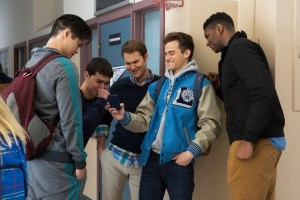
I do not like the persistent suggestion that anyone, especially focusing on a potential high school love interest, could save her. It is an excellent examination of how the small, seemingly insignificant things in life culminate into something larger, something crushing. It is also an alarmingly analysis of causality and all the ways small cultural behaviors are deemed safe yet can lead to something so dangerous. As I read through the inane stepping stones to her demise, I kept thinking, so what? Get over it! Yet it makes sense when you can see the full picture, when the minor infractions are revealed as breadcrumbs to the greater trauma.
Yet the show just keeps beating on the idea that if just ONE thing went differently, she would be saved. Bullshit.
There is never any way to know “what if.” With suicide, with anything in life.
No experience is the same for two people. There is never going to be able to judge what is “enough.” What might kill one person, might just traumatize another, and might go relatively unnoticed on another. All based on the chemistry and biology of their brains, their dispositions, and the compilations of their life experiences. Even just comparing me to me, enough to kill me as a teenager does not even register compared to what I estimate it would take to get me back to that mindset now. And that’s not because my life is better or worse or I am stronger or weaker, simply different. Incomparable.

Additionally, I took issue with Hannah’s narrative itself. Hannah presents a very detailed, logical, near clinical analysis of how she ended up on a suicidal precipice. She speaks about her pain and suicidal influences with the detachment and calm that I can muster decades later. In my experience and in my understanding of other experiences, that sort of encompassing perspective, that kind of sanity cannot coexist with self-destruction. If one could see things so startling clear through the pain, the delusions necessary to kill oneself could not consummate themselves.
Now, every suicide is different. Every pain and every person is different. I cannot reliably say that no one has reached clarity as part of their terminal journey. Yet the portrayal contradicted my expectations and struck uncomfortably against my internal definitions. I mean it did make more sense when her later traumas were revealed, yet the personal critique remains. If she could see so many things so clearly, why could she not see the other side of this temporary horror?
I wanted her to. The entire series, I wanted her to, even knowing how it would all end. And I consider that burning, sustained desire to be a success on the part of the show.
Despite my doubts and critiques, when I survived the last episode, when I considered the series as a whole, I loved it. I do not think it portrayed suicide well; I think it portrayed a suicide well. I think it told one story. One flawed person, one clumsy life–beautiful, unique and irrelevant, mundane.
Reading 13 Reasons Why
When I started 13 Reasons Why, I had no idea it was based on a novel. However, once the credits enlightened me, I of course had to follow my viewing with reading.
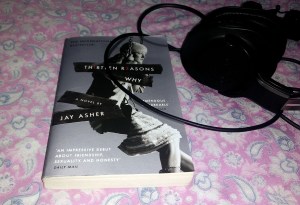
Reading a book is always a more intimate experience for me than watching an adaptation. Reading puts the narrative inside my brain rather than before my eyes, but I am happy that I experienced 13 Reasons Why in this order, series then book. In all honesty, the adaptation is close, as close as perhaps Fight Club (for me). Crucial changes yet overwhelming loyalty to the story.
So I binged on the book as I binged on the show, and I began to note all the distinctions between the two versions.
The show’s largest deviation from the novel, in my opinion, is the inclusion of additional perspectives and side stories by developing and following several of the collateral characters. This makes for a more rich (and more watchable) story, rounder characters with backstories. Something that could go into a second season with a dead protagonist whose tapes are spent.

In Hannah’s depiction in the book, these characters are flat, villainous in certain instances. The show tries to make them more balanced, give them redeeming or at least empathetic characteristics, give origin to their behaviors. It makes for a more dense and interesting plot, but it does shift the audience’s perspectives and sympathies.
The book confines the audience to Clay and Hannah, which amplified the appeal of the story for me, making it more of a case study on a suicidal youth and her suicide bystander. I was less worried about it being an accurate rendition of suicide and more taken in by the intriguing dynamics in the story.
I found it easier to relate to Clay’s direct, closed narration in the book. Hannah’s story is in first person in both instances, yet in the show we see it reverberate mostly through Clay but also fragments of the other players. The book definitely put me more in Clay’s head. With the series, I empathized with Hannah. Yet with the book, I felt Clay.

In the show, Hannah’s narration sounds more detached, resigned. It was actually unsettling to me (see above) because she seemed too objective and clear-headed for suicide. The book reads with the anger and emotion that felt more appropriate to my expectations. Her distorted perceptions and thoughts seem more clear and enlivened, even when they same words were used.
Without these distractions, Hannah’s narrative was more raw and consuming for me. Hannah’s fixations are annoying; her reasons are irrational. They should be. We never should be able to bob our heads along and say how justified the suicide was. It should be illogical, frustrating, even sometimes stupid. Then we have Clay interrupting her narrative to remind us she was wrong, to keep us tethered to the nonsuicidal perspective.
Hannah seems mad that no one tried to save her, yet she never tried to save herself. She claims she kept attempting, yet it sounds like (from her own words) she is seeking out failures, hunting for justifications for how she feels. Nothing is ever good enough for her. The way depression breaks your mind. The way we seek out ways to confirm our own distorted, destructive ideas about ourselves. Terminal self-fulfilling prophecies. Convenient harmful excuses. I know I am guilty of that, even still.
The show also upped her trauma, made her reasons more reasonable. Yet I found the book to be more resonate. More real to me. The fragile truths about our own weaknesses. The things we don’t want to believe we would do. When I read the book, I heard the deformed thoughts and twisted perceptions I expect with suicide. It shouldn’t make sense; it shouldn’t be reasonable because suicide is not reasonable.

For Netflix, they made Hannah “more” traumatized and “more” rational to make the topic more palatable. Because the realities of suicide are too uncomfortable for our culture. I liked the less desirable Hannah of the page.
The show also changes Clay. Instead of being another victim of the tapes and a cog in the process of her revenge, he is resistant and confrontational, even vengeful on the perpetrators identified on the tapes. Again, it makes the drama interesting and more digestible for people to watch (we love to think there is justice in the world), but it changes the larger message.
At some point along the way, more with the book than the show, I realized Hannah’s suicide then distribution of the tapes is like a school massacre turned inward. She takes this passive-aggressive way of selecting victims and taking revenge. She does not kill or physically harm them directly, yet she still spreads the pain that she thought no one noticed. She is still aiming to make them pay.
All Told
So after all of that rambling and waffling, what did I think? Like I said in the BLUF, I loved them. And I hated them. Some twisted, blended dance of the two. On the whole, I enjoyed both the show and the book. I understood and accepted the changes the show chose to make in the adaptation. I even enjoyed many of them, but the book remains my preference of the two. Both have their limitations and warts, yet in the end, both worked on me.
For me, the story (book and show) is about perspectives. Hannah’s, Clay’s, all the “perpetrators,’” all the bystanders’. All are narrow and flawed, incomplete and at times utterly inaccurate.
Perspective fascinates me. How every experience is inevitably influenced and distorted by perception, perception we can’t escape. How there is no unified reality. One single thing can (and is) interpreted a thousand different ways by a thousand different people. This is the reason Seven Types of Ambiguity is my favorite book. Teen depression and suicide speak to me, but I am even more drawn to the examination of perspective. That is why I connect to this story.
I do not think 13 Reasons Why is a great or amazing portrayal of teen depression and suicide, but I do think it is a brilliant depiction of a spiderweb of interactions and perspectives surrounding one pivotal knot.
We want there to be a reason; we want suicide to make sense or maybe mean something. However, the point of the book (for me) was that even with 13 tapes detailing 13 reasons in excruciating detail, it still does not make sense. It still does not provide enough reason. Or the right reason.
My interaction with this story, either on the screen or the page, affected me. Gravely affected me. It infected my mind, lingered on the edge of my thoughts and dreams every day. The scenes, the characters echoed in my brain, deep into the darkest corridors inside me. It all brought me back, stirred up feelings long starved and dormant. Not in a negative way, not even in an upsetting way. It conjured a strange yet comforting nostalgia, like finding my way back to a part of myself forgotten. I felt that damaged little girl at my core, and something in that connection was healing.
There is nothing wrong with still connecting with the darkness, with remembering and honoring all the things I have done and felt. I find it distinctly safer to maintain that relationship, lest the darkness swell and fester unchecked.
If you are hurting, do not stay silent. Nothing in life is permanent. No one can be completely lost. Had I succeeded all those years ago, I would never have seen the life that unfurled in front of me. Or the life yet to reveal itself. I would never be able to gamble with my circumstance in every decision and experience the beautiful joy and pain tethered to each course. My darkest times are still my times. Mine to own and experience, learn from and move on from.
If you are lost, do not hesitate to reach out. You can still email me. A distant voice typing on the internet without judgement. christina[dot]bergling[at]gmail[dot]com. Just don’t message me on Facebook; I get too many unsolicited dick pictures there.

Christina Bergling








 Fiery Pen