


We all do it. We watch the horror movie, and we say, “Oh, I would never do that!” But… would we? That’s what I asked myself when I wrote The Waning. And when I made this mini vlog!
Posts Tagged ‘writer’
Writing Real into The Rest Will Come
Posted: September 15, 2020 in the rest will comeTags: author, based on a true story, behind the scenes, dating, horror, horror writer, inspiration, inspired by real events, online dating, writer, writing
Some writers invent entire new worlds full of characters birthed entirely from their brains. I am not those writers. Instead, I like to take something real, most often from my own experience, and disfigure it with my imagination into fiction. Perhaps it means I lack the depth of other worlds inside of me, but I do usually prefer to pervert experience (even hearsay) into story.
Generally, reality is the inspiration, the launching point. Then the story blossoms or festers from there into its own unique manifestation.
And then there’s my book The Rest Will Come.
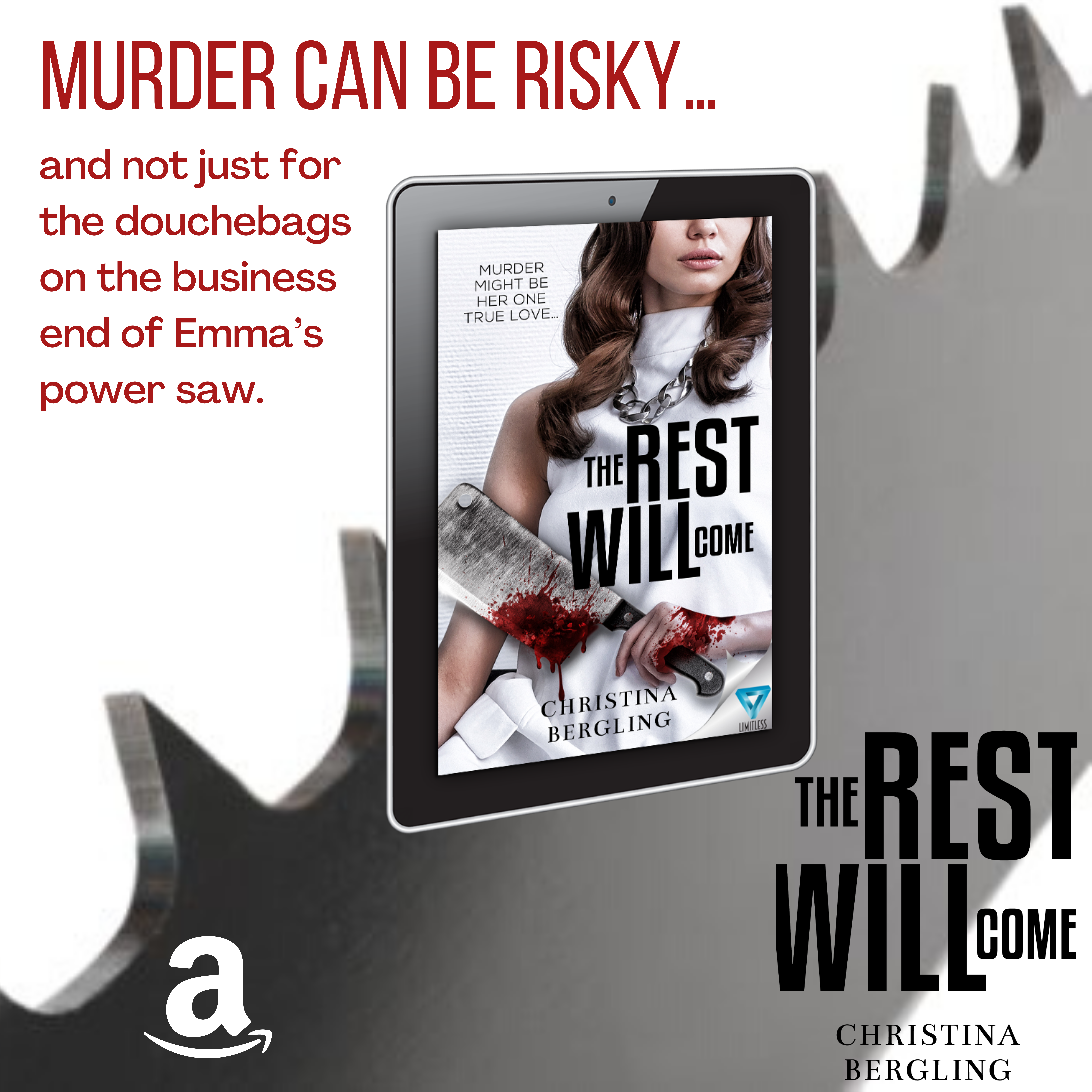
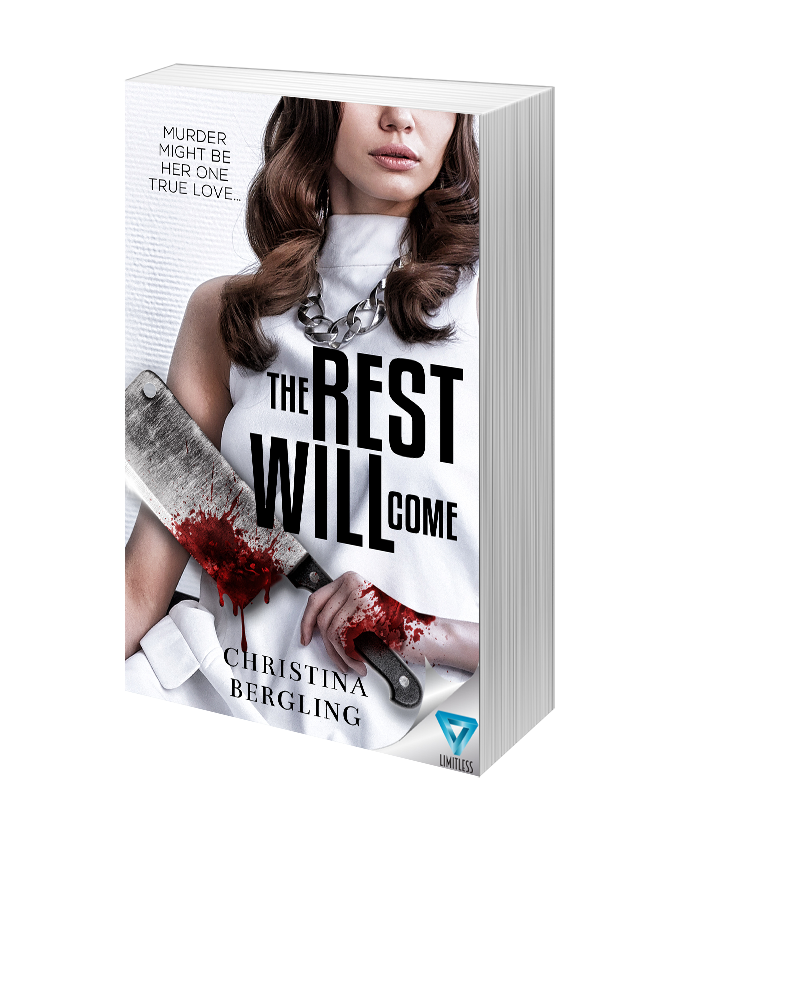 Of all my fiction works, The Rest Will Come is the most “inspired by” true events, the most infused with real people, places, and events. The core characters and opening events were ripped from the life around me, my recounting of myself, people I know, and things that happened around me (less than to me). Then as the narrative unfolded, I twisted these things into how I thought they could play out in a more fictitious, horror-comedy world.
If you endured all these horrible online dating experiences, how did you not snap and kill them all?
The challenge to using real life basis for both characters and plot events is making sure the audience is in on the full story. If they were not there for the precipitating events, they may not know all the contributing factors or influences. If they do not know the character inspirations in real life, if they do not pick up on the inside references, the characters may fail to be entirely developed. Since they were full and real in my life and then my head, it would have been easy to overlook the fact that I did not make them so on the page.

However, once the characters and the story were fleshed out enough beyond what resided in the echoes in my own head, it was fun to play with hidden references, inside nods, and Easter eggs.
Initially, I documented the “based on real” bits exactly as I remember/perceived. Then during edits, the inspirations and I decided to not really change them. Truth is stranger than fiction most times, and I just could not conjure better circumstances.
Then when I crossed over into horror and the blood began to fly, I changed from fully documenting things to little winks. Every person who contributed a dating horror story to the narrative got a namesake and a retributive murder somewhere within the pages. Places or turns of phrase would be recognizable to the right reader.
Ultimately, my goal was for people who never met me or knew my real life inspirations to fully experience the story, characters, and world within the book. For those who did know me or us, I wanted them to enjoy collecting all the little Easter eggs and laughing along their fictional journey.
Was I successful? Did I manufacture the right balance between my reality and your fiction? You’ll have to read The Rest Will Come and judge my efforts for yourself.
Now, since diving so fully into the “inspired by true” premise for The Rest Will Come, I have swung the other direction for my current work in progress. True to my nature, I only operate in alternating extremes. So, I am trying my hand (literally) at imaging an entire world and creating characters with no external reference. The change contorts my brain but hopefully in a good way. The end result and its reception will tell.

Christina Bergling
What Savages is Really About
Posted: August 11, 2020 in savages, writingTags: apocalypse, book, books, covid-19, horror, humanity, inspiration, pandemic, savages, write, writer, writing, zombies
Since this pandemic started (or more since people began reacting to it), I have heard multiple times, “Your book Savages makes so much sense now” or “I really see what you meant in Savages” or “It’s just like you wrote about in Savages.”

The goal of any writer is to produce a work that is relatable and enduring. However, when we are talking about the apocalypse and bringing out the worst in humanity, those are not the themes you want to persist. I got the idea for Savages when I was freshly home from my civilian tour of a war zone and had completely lost my faith in humanity. These are not exactly ways I want to feel forever.
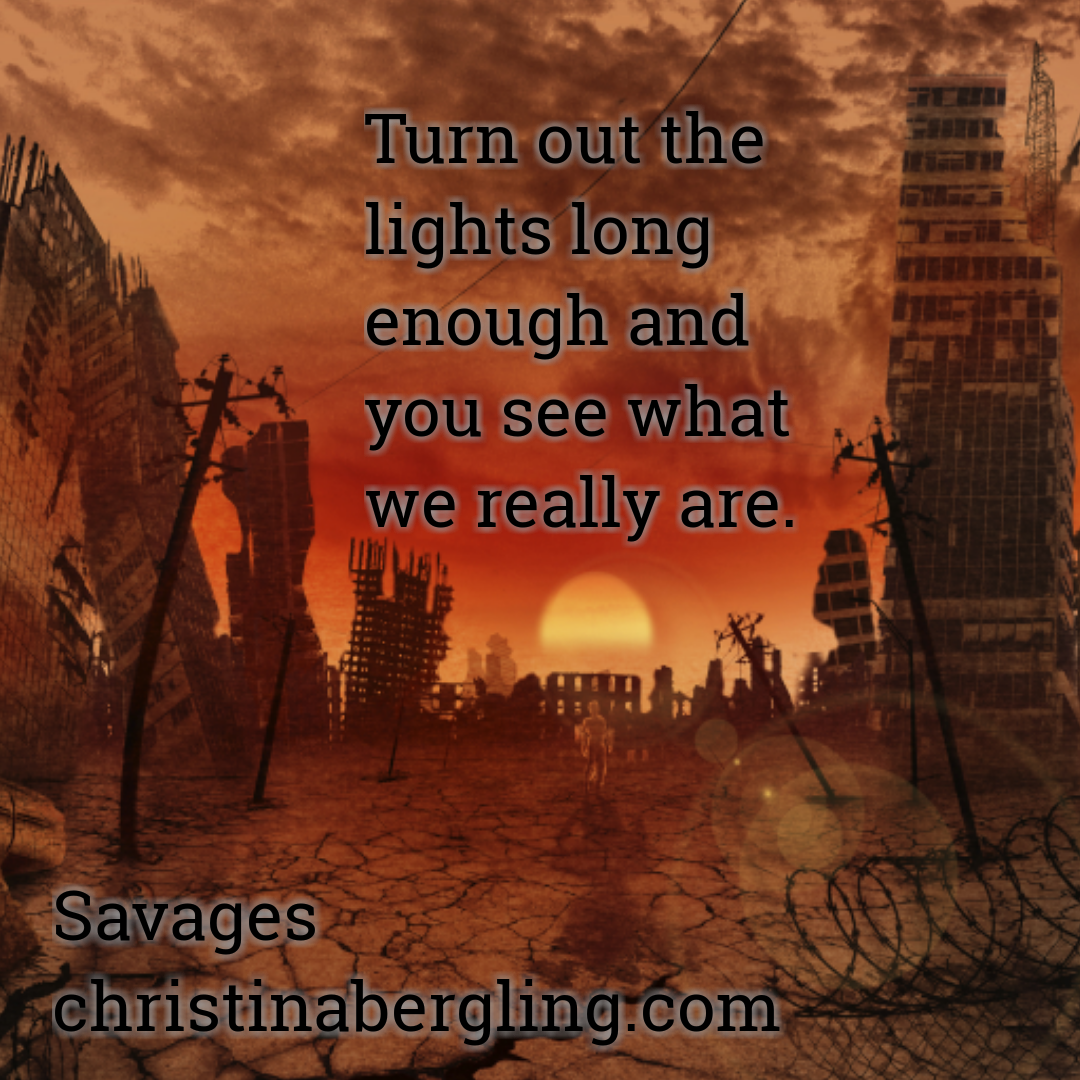
If you ask me what Savages is really about (and I’m the writer, so I suppose my answer does hold some weight), I would say that more than the byproduct of a Walking Dead binge (though that is in there too), the story ultimately is about questioning how human we really are. Are we civilized, or do we just pretend when we are comfortable enough? Are we all truly savage underneath it all?
I took a lot of anthropology electives in college. In those classes, we spent a lot of time trying to differentiate the common human base from the variable layers of culture applied over it. I took even more psychology electives in an attempt to sort out what was happening in my own head at the time (when did I actually have time to take the classes for my writing major?). In those classes, we compared varying theories on nature versus nurture. What are we born as, and what do we learn?
Somehow, all of this academic experience combined with the hopelessness and disgust I felt at my tiny sampling taste warside (plus a dash of zombie pop culture) left me wondering: are we all just animals, pretending to be evolved and civilized? But animals wasn’t the right word. Savagery was what I was thinking about. Savagery was I saw underneath our surface and wondered if it might be our true nature under all our “humanity.”
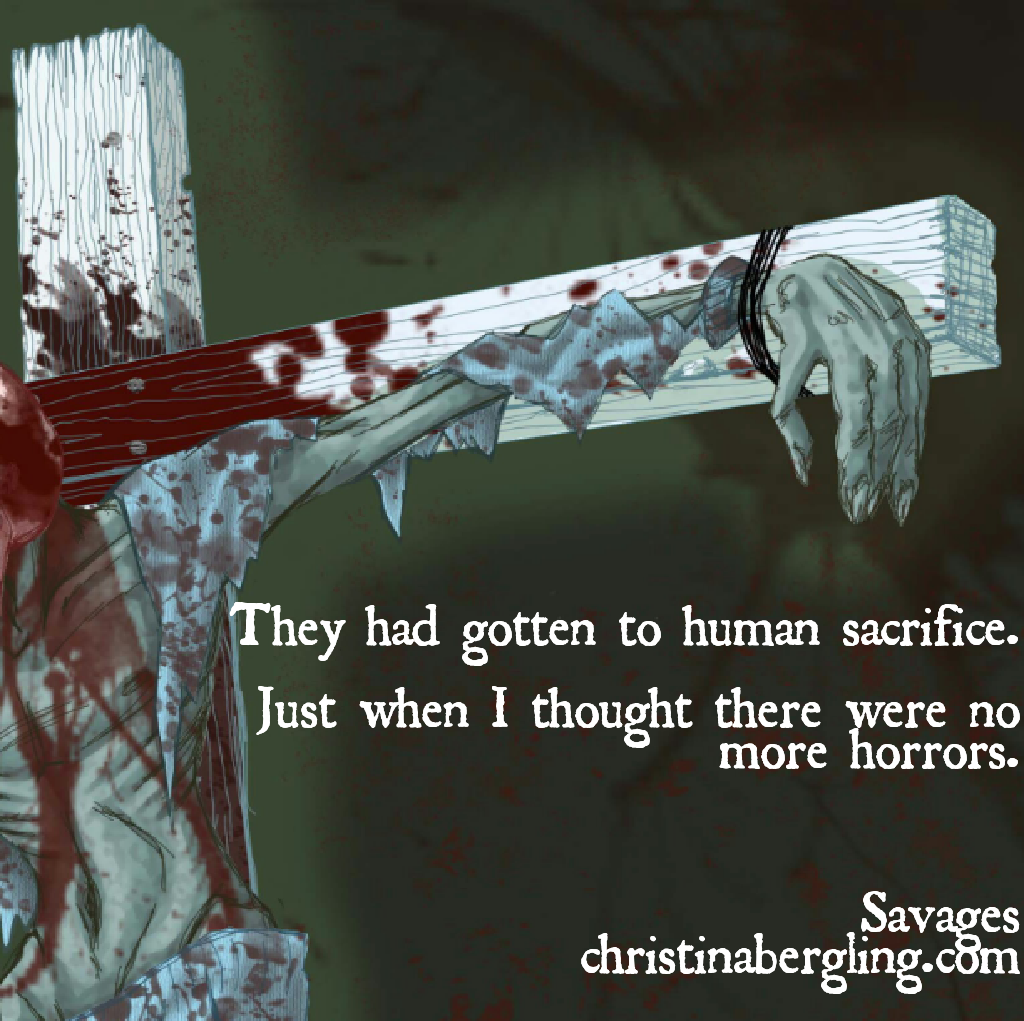
So I used the story in Savages to sort the problem out in my mind. Not surprisingly, my protagonist sounded a bit like me, asking all the questions I had batting around my head. She’s even as resistant and depressed as I would no doubt be in that post-apocalyptic position. Sometimes, you write what you know, and I know myself.
Where did I… I mean, she end up? What did she decide about humanity? To find out, you will need to make the journey through the fallout with her and read (or listen to) Savages!
And what about now? A decade later, I had improved my world outlook or fallen back into a comfortable complacency, however you want to look at it. I came home and lived my comfortable life, focused on my family. Then the world swelled back in ways I could not ignore. Pandemic, quarantine, police brutality, a scrolling list of awful—of savage.
But I feel the same way I did those years ago again; my mindset has returned. Savages makes sense. Everything I meant resonates for me again. And I don’t like it.
Last time, I dealt with these feelings with complacency. I accepted our savagery. I was able to accept the world being shit and focus on finding my own happiness within that. Yet, I am different now. I am less complacent. Perhaps it is motherhood, but I do not want to leave things this awful. I do not know how to change them, but I want to, and that desire is unsettling.
Maybe that is what my next book will be about.
At the moment, I am not happy to be reanimating the feelings of Savages. I would rather be reliving The Rest Will Come instead, if we’re picking from my bookshelf.

 Fiery Pen