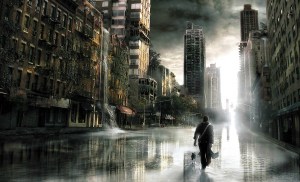
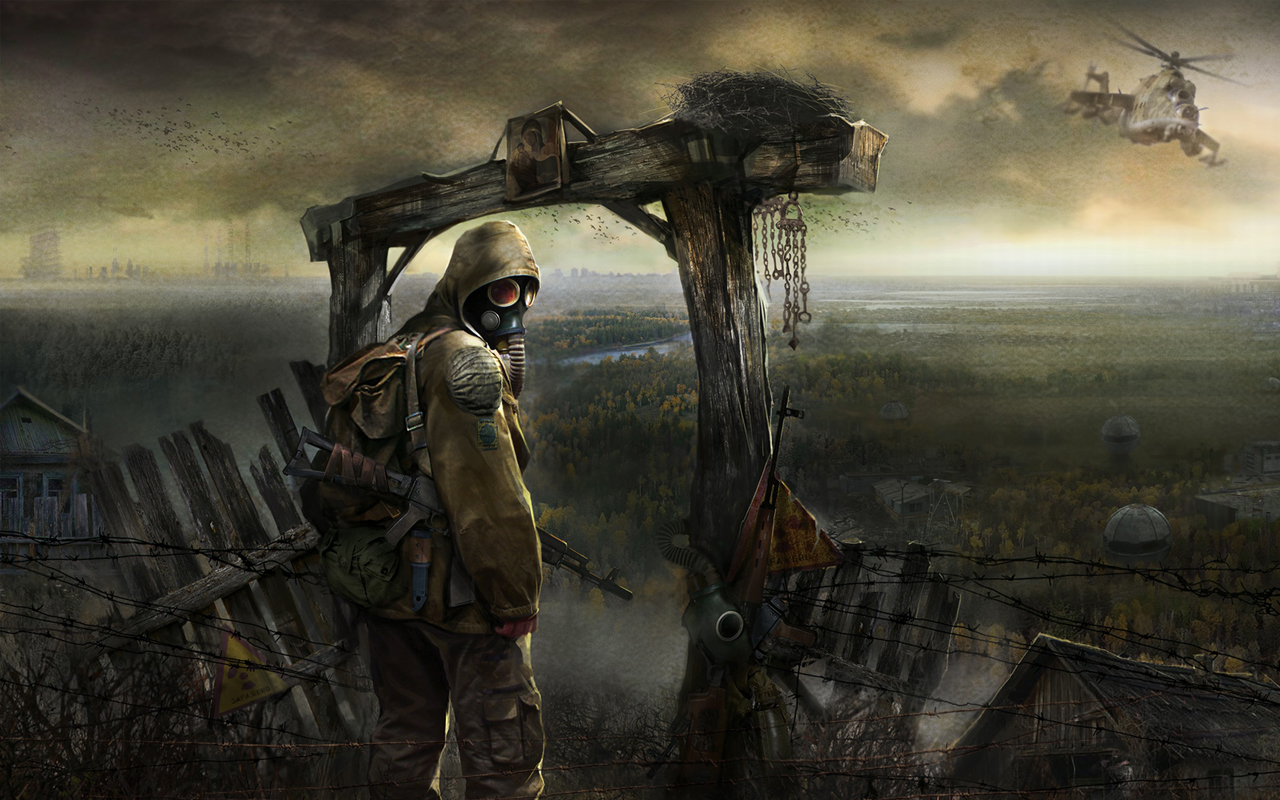
First, people were on edge. They did not smile as they crossed paths, if they ever did. They talked but only about “it,” what was happening all around us. Our entire society was fixating, waiting the end coming slamming down around us the same way we obsessed over celebrity divorces, political scandal, or the Sunday football game. There was even enough time for the apocalypse to become parody on YouTube and Saturday Night Live before everything collapsed around us.

People didn’t take it seriously at first, didn’t acknowledge it was really happening until it was done. There was no way the world was ending. As always, we were a culture of denial, a culture of short sight and no consequences. Yet now, every consequence was looming over us as we laughed in their faces. As we were poised to get what we deserved.

Television and radio probably lasted the longest, programming still streaming away until being overtaken by 24-hour news updates. We knew it was over when the air went black, when the flickering flat faces and their voices stopped. The death of media was in parallel with the death of everything. The last cockroach to keel over.

Conveniences went first, like the social niceties, the few people feigned to begin with. It was all a preview of the humanity we would lose. First, we would stop being polite; later, we would stop being human. First, we would shove someone out of the way; later, we would cut them open. The apocalypse wore away on us in stages, the same way it ate away at the world around us. Again, all while we told ourselves it wasn’t happening. We were still human, and the world was not ending.

We all longed for the world we did not appreciate, the society we mocked and cursed.

When civil services dropped off, we truly descended into chaos. It was like a classroom without a teacher, a toddler out of sight of a parent. With no one watching, with no one punishing, we revealed our true nature. At first, we went crazy with freedom, looting stores to finally lay hands on the coveted items we could not earn. Then we became desperate, clawing and maiming to scratch at a can of food.

We weren’t people anymore; we were survivors.

162727-42768

Once the cities were stripped and the bodies stacked up, our culture, our society was nothing but a wasteland. Everything we were, our buzzing clockwork of existence, was reduced to relics, empty shells to remind us of what we used to be. Grocery stores were only the bare bones of shelves. Electronics were piled up dead and useless. Our cute little suburban houses were reduced to ashes.

What emerged instead was no longer a society, could not be called a culture. It was transient and adaptive, human nature itself manifest. All the ways we were taught to behave–manners, rules, norms, expectations–were worthless and forgotten, abandoned in a fraction of the time it took to cultivate them. For all the work our parents and our culture did, it all meant nothing now. Those who clung to those ideas, tried to emulate the lost world died first and fast.

Survivors were something new, something empty and untrained. We were reduced to instinct and reaction. Our behavior was determined by one influence–survival. It only mattered what it took to see the next day, what put a fraction of food in our mouths. Those of us who survived, who remembered the way it was before the fall, only strove to forget.

It was too painful to remember.

LTXgAMqTA

*

When the apocalypse comes, what do you think will be the first thing to go?

Mini Review: Stalker’s Shadow

Posted: October 8, 2014 in reviews
Tags: , ,

I love flash fiction, reading it and writing it. I discussed this when I reviewed The ABCs of Death

The horror short, Stalker’s Shadow, is definitely a flash horror short at less than two minutes. Even in those two minutes, the pace of the story is slow, peaking my curiosity. Then it seems to dissolve into a bit of a blur at the end. When I first watched it, I found myself a bit confused before the caption reorientated me. Then I was able to appreciate the cleverness of the premise.

I enjoyed the filming style and the angles of the shots. I also found the music to be very stereotypical horror, but I did enjoy the application.

Definitely worth the less than two minutes to watch it.

My partner has a not-so-secret belief that I am a serial killer. Not in a “maybe you were in a past life” sort of way but more an active on the down low sort of way. Dexter-style, if you will.

His suspicions arise from my sadistic streak and my talent for manipulation. I am no serial killer, however. Instead, I think I am just more in touch with my inner savage nature; I am more honest about what am I at my core. That intimacy with my own primal self is what helped me write my book, Savages.

Whichever way you slice it, this part of me is the backbone to our apocalypse plan.

The idea started easily enough. We were watching some apocalyptic movie or TV show (both of which are steady in our entertainment diet). He made some comment that he might not be able to do all the killing required; he would not want to. To this, I replied simply, “Well, baby, I’m going to handle all that; you think I’m the serial killer, remember?”

From this hatched our hypothetical division of post-apocalypse duties.

My partner has wanted to purchase land for years. He would like to permanently reside self-sufficient on said land. Only, tragically, he would have to do so without me, so the compromise is to live in civilization and own said land for vacation and, of course, the apocalypse. Even without an imminent threat or an unavoidable need, he simply enjoys things like living off the grid, farming his own food, improvising conveniences, camping, and survival skills.

Obviously, since he already harbors an interest and enjoyment of these would-be necessities, he would be in charge of managing the related tasks. He would procure our drinking water, grow our crops, engineer devices for our survival.

That leaves me with what he thinks I already secretly indulge: I would be in charge of the killing.

Killing in a post-apocalyptic world would be unavoidable. It could be animals to eat, but, even more likely, it would be other survivors for survival. With creature comforts eliminated and resources restricted, when we all devolve to our savage roots, there will be (many) times it will be kill or be killed. After just the briefest and most peripheral exposure to people at war in Iraq, I believe this would undoubtedly be true should the entire world fall.

So it is a win-win. My partner is able to avoid the dirty work, and I am allowed an acceptable and productive outlet for the darkness he thinks is at my core.

And if I am driven to savagery and survival, I am going to be savage. I told my partner that I wanted to line the far perimeter of our land with the heads of those who had attacked us (and I dispatched) on pikes, as a warning. He only lamented that this approach would require him to make pikes, impale severed heads with them, and plant them in the ground.

I told him I would do the decapitating for him.

Survival is a high stress situation. It is best to have a plan, especially with your family (or established survival group). My partner and I have been together a long time; we know each other and our various talents and proclivities rather well. Yet, I feel more comfortable having discussed our basic plan and division of labors, as joking as it may have been. We have kids and dogs to keep alive; we cannot be wasting time bickering over whose turn it is to kill the latest threat.

Who would start in your survival group? How would you divide duties?

Real Life Fear in Horror

Posted: September 17, 2014 in horror

Horror is about fear. Whether it is movies, books, art, something is classified as horror if it creates or references fear. It calls to reason, then, that when a piece of horror hits one of your true, real life fears, it is more effective. Expertly crafted horror will call up the proper emotions and responses regardless of the fears with which the audience comes in. If horror is done right, it will be upsetting and terrifying whether you fear the elements in real life or not. That being said, if you come into the viewing/reading/etc. already primed with an existing fear or phobia, half of the work is done, and the horror is able to simply build on the groundwork already laid out in your mind. Plus your responses are most likely going to be more intense coupled with genuine existing emotions.

So with that idea in mind, let us tour my own real life fears and the horror that exploits them just a little. I have a laundry list of fears, phobias, and general dislikes enough to classify me as a bit neurotic; however, these accelerants are what make me enjoy horror so much. Horror is able to affect me gravely because it can latch on to so many dark corners already hiding in my mind. The adrenaline is real; the high is higher; the relief is addictive.

Claustrophobia

I hate small spaces. For me, this is a physical and biological fear. Sure, in theory I can talk about small spaces and see small spaces, but when I am crammed in and my arms are pinned against me, it is my body that reacts. Given enough empathy and stimulation, even the representation of these small spaces in horror is enough to quicken my breathing, accelerate my pace, get me sweating. It is that feeling of being physically trapped that terrifies me. I would even get that burning in my limbs as a child when my father would pin me down when we wrestled, and suddenly, I would be no longer giggling and howling to be released. Like I said, I hate small spaces.

Two movies immediately come to mind when I think of claustrophobia. The Descent and As Above So BelowThe Descent  would have scared the hell out of me on collapsing caves alone, save the devolved, murderous humanoids. When the women were shimmying through constricted cave tunnels, I was quivering in my seat, feeling the dust rocks pressing against me from all sides. As Above So Below is not much different; however, the experience is amplified as the movie is filmed in the shaky hand first person camera style made famous by The Blair Witch Project. While that approach made me severely nauseous, the gritty and disorientating filming also made it feel all the more realistic. I actually caught myself breathing through one scene where a character was stuck in a confined passage. I empathized so much and was so engrossed in the movie that I physically reacted to the idea of being trapped in that small space in the catacombs.

As-Above-So-Below-Movie-Stills

Batophobia

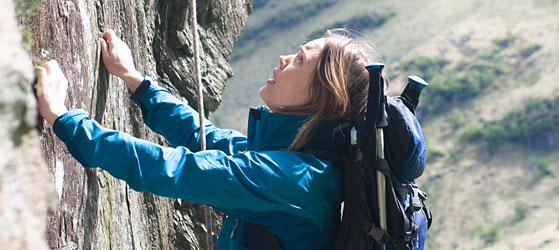
OK, so many I don’t hate heights enough to call it a phobia. Maybe not even enough to call it a legitimate fear. Let’s just say that heights make me very uncomfortable. This is definitely more true in real life, when I am actually confronted with standing at the top of said height. I can deal with heights in a way I cannot with confined spaces. I can acclimate to them and cautiously make my way through the time spent near them. I don’t have the overwhelming physical reaction that I do to my claustrophobia.

Nonetheless, a good piece of horror that includes heights will still be accentuated by my discomfort with them. This really only works for visual horror (TV, movies) since heights are largely a visual experience. Even if I read a gripping scene with vivid detail, I doubt it would conjure the anxiety in my chest that actually seeing the distance (albeit on a flat TV or movie screen) does.

Most height-related movies do not so much fall into the horror genre. I even watched A Lonely Place to Die, anticipating to see horror with a heights element only to be disappointed when it dwindled more into a suspense thriller. However, the first half of the movie, where the characters discover a kidnapped girl while mountain climbing and are them hunted by her captors, was definitely more within the horror genre and did include heights. Somehow, a chase scene is just more exciting when it includes a sheer cliff.

a-lonely-place-to-die-still

Arachnophobia

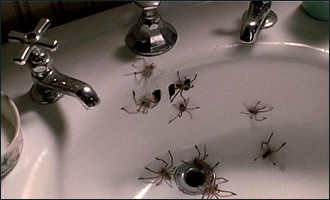
Well, hell, they made a movie by this title for a reason. Spiders creep me out, literally, with all their wriggly little legs and segmented bodies. When I lived in Tennessee (briefly), my partner and I once came across a spider that seemed nearly supernatural. This awful thing would climb up its web to drop down at you in assault. It would also attempt to swing in at us on the thin thread from which it dangled menacingly.  It seemed entirely immune to the barrage of poison my partner desperately sprayed on it. Picture, if you will, two full grown adults shrieking and carrying on at the mercy of this eight-legged demon. Terrifying. The spider finally did meet its end when my partner beat it to death very effectively with a shoe, yet that night haunts us both.

Arachnophobia was not a quality movie. It was actually pretty awful, as a horror movie and simply as a movie. Yet it still scared me. As a child, it pumped me full of a stream of nightmares; as an adult, it still crawls under my skin. It would just be another crappy movie if it did not hit so squarely on my real fear of spiders.

arachnophobia

Home Invasion

Like most women, I have been conditioned to fear and avoid home invasion. We close our blinds, lock our doors, vary our routines. All practices to avoid someone breaking into our home as we sleep. All people in our culture may not fear such an event, but surely we all work to avoid it. That is why there are locks on our doors and why alarm systems are so plentifully installed. I have more than once imagined hearing someone outside my window or been duped by a cat shifting in my house. The fear is triggered easily.

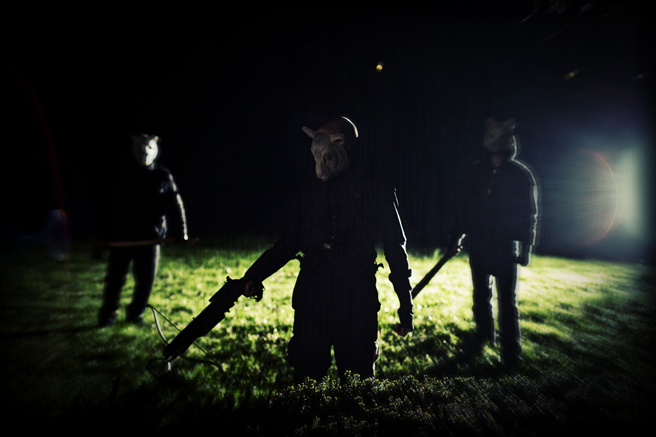
Home invasion has become its own subgenre in horror, most likely because it is such a widely established fear. It provides a large target audience. The most recent home invasion horror I saw was You’re Next, which I loved. It began on a normal home invasion premise, masked psychos breaking into homes and killing the residents; however, it then takes an unexpected divergence (no spoilers). The home invasion element did truly exploit my real fear of it until the movie transitioned away from it. Then I could appreciate the horror for unrelated quality.

youre-next-masks

Human Nature

I actually wrote my entire book (Savages) about the fear of human nature. The apocalypse subgenre of horror seems to be absolutely exploding these days, and every apocalyptic story ultimately ends up examining human nature, usually unfavorably. For myself, I fear the savages we are at heart and that would be exposed once all creature comforts and society were removed. The Walking Dead is no different with its slogan of Fight the Dead. Fear the Living. We all know what we have lurking deep down within us; it is terrifying to consider that actually being unleashed.

twd

What real life fear of you is amplified by a piece of horror?

I have a guilty pleasure: sexual tension and ill-fated romance in horror and apocalypse stories. So deep does my secret affinity run that it manifests as a major line in my own book (Savages). I simply cannot help myself.

Do not misread me; I am not looking for classic romance. I do not want a happy ending; I do not want courting or dating or any of that drama. Even if part of me is rooting for ultimate consummation or for the characters to end up together, I am always secretly satisfied when it goes so terribly awry. I think it is less about the actual romantic element and more about the juxtaposition of it within a terrifying or catastrophic scenario. It is normalcy in the traumatically abnormal.

Sexuality is also very primal, very base, which runs completely in line with survival, be it surviving a killer, the apocalypse, zombies, whatever. It seems appropriate to acknowledge and include that instinct while exploiting the others. It makes the scenario and the characters seem all the more real to us.

Humans are hooking up in every scenario; you cannot stop us. And when in real life does it ever play out like a romantic comedy? It is all the more accurate to be messy, ill-fated, or unrequited.

When I wrote my own book, the sexual tension between the characters is where the story began to blossom in my head. In a post-apocalyptic world slim on survivors, with all the normal world and distractions stripped away, I was able to concentrate on two elements: survival and her attraction to him. For me, the survival was the setting, and the attraction was the story.

And that is because of this guilty little pleasure I have. Clearly, however, I am not the only one, as this element does appear in horror and apocalypse stories.

For horror, Hannibal Lecter and Clarice Starling immediately come to mind, whether in the novels or the movies. In Silence of the Lambs, Hannibal is clearly intrigued by Clarice and her intelligence, in a similar way he was by Will Graham in Red Dragon. In both instances, he wants to toy with the other while also teaching them, minimally helpful manipulation.

hannibalclarice

However, his interactions with Clarice take on that additional level of sexual tension. Hannibal is aroused by her vulnerability, hungry for her specific psychological damage and idiosyncrasies, a level he never achieved with Will. I think this sexual tension and Hannibal’s attraction to Clarice is what makes their dynamic so interesting and convincing.

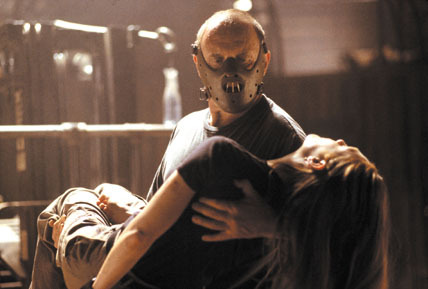
By Hannibal, Hannibal’s romantic attraction is fully realized and no longer relegated to simple sexual tension in their interactions. In the movie, he sacrifices his hand to spare Clarice hers; in the book, he drugs her and spirits her away to live with him in the jungle. By this point, it got a little too romantically centered for me but was still enjoyable.

hannibalclarice2

The sexual tension in Silence of the Lambs was much more engaging and entertaining that the outright romantic pursuits of Hannibal, but throughout the franchise, that sexuality is a strong element between the characters and in the plot. Hannibal being my favorite fictional serial killer does not hurt either.

As far as apocalypse, (let’s go mainstream, why not?) The Walking Dead fully exploits the soap opera of human sexuality in a apocalypse survival scenario. The Walking Dead being such a sensation and its success bringing it so mainstream does always lead to more interpersonal drama, a tactic to entice outside the initial target audience. Yes, I have the zombie lovers, but if I have a little romance, let me hook those on the fence too.

The first instance of sexuality and romantic drama in The Walking Dead was the love triangle between Rick, Lori, and Shane. Rick wakes up to the zombie apocalypse and hunts down his family, only to find his wife entangled with (and impregnated by) his partner, Shane. Definitely soap opera worthy but enticing all the same. The scenario is also pretty realistic. If you thought your husband/partner was dead, would you not consider finding comfort with one another?

ricklorishane

The relationship between Glenn and Maggie is probably the longest and most explored in the series. They start as convenient fuck buddies on the farm (sex always happens during lulls in combat, right?) then develop into a full romantic relationship. They get separated and reunited; they make horrible and dangerous decisions based on their love for each other. Again, this crosses my unrequited, inappropriate romance line (for my own personal affinity); however, it is still very effective. It gets the audience invested in them, rooting for them (and hence hooked on the show).

glennmaggie

I, personally, think sexual tension and romance has a place in horror and apocalypse. It attracts my interest and also makes the scenarios and character seem more authentic to me. Even facing the end of the world, given a moment to breathe, I believe humans will continue to be sexually driven. Oh, it seems the zombies are gone for the moment; how about a roll around in an empty pharmacy?

However, I think the inclusion of this element must be applied properly. Too much or too idealistic and it violates the genre; too little and it is lost and its purpose is unrealized. It needs to augment the plot and play off of the survival scenario; if it takes over as the story, it becomes too much.

Hopefully I succeeded in doing just that in my own work.

iraq3

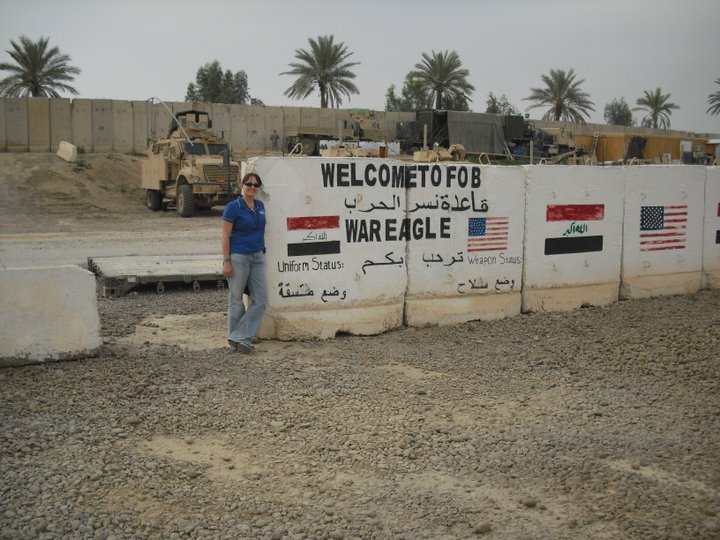
I support the Wounded Warrior Project for the same reason my book has the characters and themes that it does: my own time in Iraq. In 2009, I spent three months in country (Baghdad, with stops in Tallil and Taji) as a civilian contractor. That entire experience changed my perspectives on just about everything. However, I can trace when wounded veterans became especially prominent in my mind to one single instance there.

iraq2

In Iraq, every day was the same. Unless I traveled (which was a nightmare all its own), it was impossible to distinguish one day from the next. I worked the same shift every day, so days of the week meant nothing. I marched through an identical routine every day.

Every morning, I wrenched myself from catatonic, depressive sleep and crunched my way across the deep gravel of the contained housing unit (CHU) pad. I hit the treadmill and the weights then walked back to my CHU, back across the pad to the lone female bathroom, and back to my CHU again. I was like a zombie just going through the motions and counting down the days until I could board that plane back home.

When I struck out on the sea of gravel once more to walk to the work trailer, I saw him. He was moving across the rocks towards the trailers. In the wavering distance of the desert air, he looked like any other soldier. Perhaps his silhouette was slightly slumped and his walk a little punctuated. It was impossible to tell on those shifting rocks. I just continued toward the water palette and then the road and did not think twice about it

As we approached each other, I could make out more. Squinting in the harsh sun glaring off tall concrete T-walls and the dust covered roads, I could tell that his skin color was not consistent. From behind my sunglasses, it caught my attention more, perked my curiousity. As our opposing trajectories brought us closer along the gravel pad and he came into focus, I could see why.

His skin was a patchwork of scars. The minimal flesh exposed by his pixelated BDUs–his entire head and neck, both his hands–was stretched, shiny, warbled. He looked as if he had been melted. His skull was no longer round, and deep scars snaked through the buzzed hair that had grown back on his now misshapen scalp.

Our paths crossed under the bright light on dirty rocks, and I, shamefully, was in shock.

My entire time in theater, it was customary to make eye contact and say good morning or whatever salutation as you passed someone. Perhaps this was not universal, but it was my experience, and that small gesture always made things feel more normal and civilized than where we were.

When confronted with this survivor, I did make eye contact, thankfully with my mouth closed (at least that made me less of an asshole), yet my voice failed me. I was lost with my mind reeling to wrap around the extent of the injuries I was seeing on a walking, functional man. I was taken aback; I was inappropriately fascinated. Then that brief instance of our passing was gone, and I had failed to treat him like any other person.

Before the sound of his footsteps even crunched off into the distance, I was awash with regret. It welled up in my throat that had been so sadly dormant. I wanted to chase him down and rectify my failure, replace it with a normal interaction, but that time had passed. That moment was gone, only filled with wide eyes and closed mouth. Instead, I walked on to work, wringing my mind and mentally berating myself.

More than the clearly catastrophic injuries he survived, it was his presence that weighed on my mind, like a thorn buried in the back of the gray matter. I got over his appearance once the shock sank in; instead, it was the fact that he had endured such trauma, assumably during some phase of this same war, recovered, and redeployed. Him putting the uniform back on and returning is what haunted me and turned my mind.

The mere seconds of seeing this soldier stayed vividly in my mind. My overabundant empathy fixated on his motivations. Maybe he felt he needed to return to finish the job. Perhaps it was the only place that felt normal after such an experience. How could I possibly fathom? What did I know about any of it? All I knew was that I admired him, whatever the reasons and story behind it.

That experience, and specifically my lapse in normalcy, changed my mind. He was a physical manifestation of the sacrifices made by the military that I was only beginning to learn about. My three month civilian tour was the smallest glimpse into the years they spent deployed away from their families and lives. The stories and reports I heard were only echoes of experiences they went through. It was all just a taste that still managed to change everything. And this one man, with less than a word from either of us, solidified the depth of what was involved and the respect it deserved.

After that morning, it became very important to me to properly support those who had sacrificed. I still think of this nameless soldier from time to time. He still walks through my mind and reminds me of what I left over there when I returned to my comfortable stateside life.

iraq1

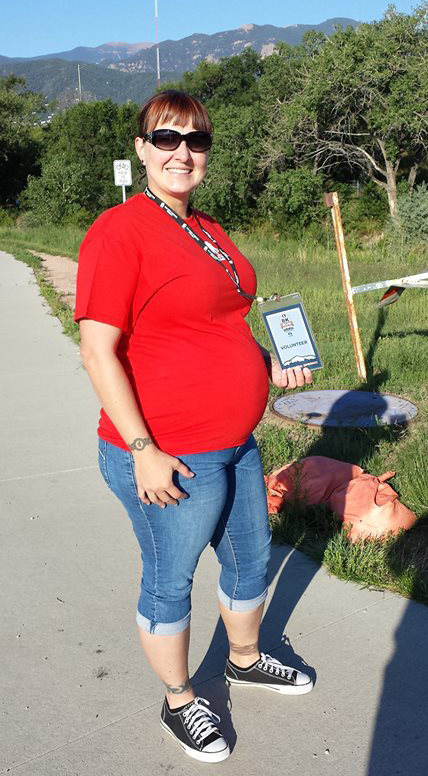
Once I started running, it was a definite goal of mine to run a race benefiting the Wounded Warrior Project. However, things never quite aligned. When I lived in Chattanooga, there were none close by. When I moved back to Colorado, one got flooded out. Then, finally this summer, the Wounded Warrior Project 8K came to town, inconveniently when I was over 9 months pregnant.

However, I would not be dissuaded from participating. My doctor cut me off from running at 7 months pregnant, and even if she had not, I did not anticipate pulling off 8K that far along. Instead, I resolved to volunteer my time. I waddled my very round belly around and helped with set up and then course direction and cheering.

wwp8k

While I didn’t do much, it still felt better to do more than donate money, to actually physically do something. I suffered for standing so many hours so pregnant for the rest of the day, but it was worth it. It was barely a tax paid on the debt that I owe.

Consider the my to-do list. Consider this my plan to start preparing.

prepared

Let’s say the zombies started shambling tomorrow, staggering stiff-limbed and rotting through the streets, clawing and wheezing and chomping their teeth. Would you be prepared, or would you be lost in the panic?

Would I be ready? Today, absolutely not. I think about preparing; I muse about preparing; I even talk about preparing. Yet I lack in follow through. Like so many, I fall victim to complacency. Sure, the zombie apocalypse looks terrifying (and entertaining) on my lovely flatscreen TV, but surely that won’t happen tomorrow! Or even the next day. I tell myself that I have time.

However, when the apocalypse comes (zombie or no), there will be no announcement; there will be no gradual transition. It will crash down, and you will either be prepared or not.

So I am taking the first step in zombie apocalypse preparedness; I am making my ideal plan.

When the undead begin clawing at my door, or even when I see them teeming nearby on the news, my first priority will be to gather supplies and GET OUT. I love to live in a city, to be near activities and around people and community. However, in the apocalypse, for all their resources, cities are suicide. The more resources, the more people. The more people, the more zombies.

Most importantly, once civilization falls away, you need to survive the other survivors just as much, if not more than, the threat. People turn savage when their resources are threatened, when they legitimately fear for their lives or even their way of life. It is best to band with a group of well-known family or friends and strike out, getting as far away from the dangerous masses as possible.

Plus, if the zombies are infectious, a city is the easiest place to get infected. Priority #1 is to BUG OUT.

To enable me to bug out with ease, I have to be prepared. I will need bug out bags properly packed and stocked at the ready. Most importantly including water purification and food rations and enough for the whole family. We need to be able to snatch up those packs and move at the earliest possible moment to avoid being caught in the surge of refugees.

Beyond the elemental basics of food and water, these bug out bags need to contain provisions for shelter during travel, basic tools, and (perhaps next most importantly) weapons. Guns are extremely effective but require ammunition and attract attention by sound. Silent, reusable alternatives like blades or blunt objects should definitely be included, multiples based on size and weight.

Packed down and bugged out, the next priority would be travel. I would want to move as camouflaged and subtly as possible, making my way apart from the other survivors and zombies. I would want to cover as much ground as possible to put distance between myself and the majority. Being economical with resources and rest would help to maximize the progress made. The goal would be to put down miles without attracting attention.

Ultimately, I would need a bug out location. I would want this property to be remote, secluded, not easily discovered. A cabin in the mountains would be ideal (and would have plenty of non-apocalypse uses beforehand). There would always be the risk that other refugees would find it before I arrived, so I would have to be prepared to either share or reclaim my cabin.

My bug out location would need to be properly stocked. I would want more rations, tools, and weapons, but they would need to be hidden or disguised enough to not be fully exploited by the time I got there. And I would need to be able to protect them once I was on site. I would want either enough rations or enough means to procure rations (hunting, growing, what have you) for me (and my group) to survive at the cabin long term.

The goal would be to resettle in a new and safe location. However, depending on the apocalypse and the duration and severity of the aftermath, that might not be an option. In many scenarios, nomadism might be the most effective survival strategy. Stationary and too comfortable invites threats and most often other desperate survivors, especially the longer after the event. I would need to be prepared to replenish the bug out bags and keep moving.

If settling at the bug out location, I would need to be prepared and staged for self-sustaining existence. I would need a water source. I would need a steady procurement of food, either by growing, gathering, or hunting. I would need to be well fortified and protected.

However, if I was unable to stay and had to continue moving, I would need to be staged to exploit my bug out location and carry the provisions with me. I would need to adapt to a nomadic way of life and find ways to continually find resources on the road. I would need water purification means that would be lightweight and small and could be continually applied to varying water sources. I would need weapons that were reusable and easy to carry; I would want back ups in case one was lost or taken from me. I would need portable shelter and clothing for the different climates I would move through.

Hopefully, all these preparations would keep me (and my group) alive long enough to learn how to live in the new world. Surviving the apocalypse would be about longevity and adaptation. Things would never go back to how they were, so the greatest long term preparation I could have would be the aptitude to survive in whatever was on the other side.

So, tell me, what is my plan missing?

If I am going to be talking about survival (even in apocalyptic proportions), I should start by discussing my own small brush with Death. I have been relatively lucky in life and have not (yet) needed to physically survive much catastrophe.

The closest I came to surviving a natural disaster was enduring a 9-day blackout. A nearby tornado sent a devastating storm cell through our neighborhood, which tore down many of the large, established trees. The trees took out power lines, pulled down the poles, blocked all the roads. My daughter was a newborn, and I was on the end of my maternity leave. We still had access to food and water and could easily drive to electricity (once the roads were carved open). It was just a long series of inconvenient days.

I also went to an active war zone for a couple months. However, by the time I put boots in Iraq, contractors were no longer allowed outside the wire, so I had no direct contact with the country or the conflict. And insurgents were less than effective with missiles over large walls and concrete T-walls.

The first time I heard the sirens in the dining facility (DFAC), all of the third country nationals (TCNs) came flooding out from the kitchen to hide under the tables. My heart started to pound in my ears. I did not know what to do or if a rocket was going to  come blazing through the ceiling. My coworkers calmly kept eating and told me if a rocket hit the building, a table was not going to save me. And that was it.

My closest flirtation with Death, instead, happened when I was 22 on the Arkansas River. I was graduating from college that summer, and a large contingent of family was in town for the ceremony and my younger sister’s graduation from high school. We decided to go whitewater rafting a couple days before the festivities.

I squeezed my (at the time) fat ass into a wet suit, and we took to the rafts. They divided our group into two, and I ended up in the second raft. It was a Colorado drought that year, and the water level was extremely low. As the raft drifted down the river, I often felt the river rocks bumping against me through the bottom of the raft. Over and over, we got stuck on a rock and had to shimmy, shake, pull, and paddle our way off. It was not rapids we encountered; it was exposed rocks.

At one particular point, the raft got deeply wedged up on a rock. The water then poured down from the rock in a small slip but not at enough volume to keep us afloat or moving. The raft clung to the rock, and all our jostling and shifting were for not. As the first raft disappeared around the bend, our guide eventually dismounted the raft and instructed us all to do the same.

As my uncle and I stood, a wave of water pushed the raft up and onto its side, spilling us out. I felt my feet slip from the raft; I felt myself falling. And I felt my leg slide behind the chicken line (the rope that lines the top of the raft). I plunged into the cold water, and the force of the water held me down, yet I was not moving downstream. I was stuck, immobile, caught.

I kicked my legs confused, but my right leg was hooked on that chicken line, caught behind the knee. I was tethered to the raft. My hands shot out only to grope cold, shapeless, moving water. I struggled to sit up, but the weight of the current moving over me held me down. Panic spread through my skin as I realized I could not get out, could not get up, and could not get free.

At this point, my body and my brain divorced. It happened so quickly and so completely. I felt the panic in my flesh; I was aware that my body continued to flail and grope, that I was thrashing around in the water like I was drowning. However, my mind ascended somewhere more detached and placid.

I remember the thought moving slowly over my mind, Holy shit, this is how I am going to die. I’m not even going to graduate college. This is how I’m going to die. This is bullshit.

Even with this bitter acceptance laying across my brain, my body continued to fight. I tried again and again, repeatedly, to catch a breath of air. My lungs and my muscles were desperate. The sunlight danced on the surface of the water, which appeared to be just above my face. It looked so close, like I was right there. Surely, I could just lean up and take a breath. I struggled and stretched, yet every gasp only filled my mouth with more water.

My arms continued to claw out into the shifting nothing around me. They were relentless until my nails raked across something. All my attention diverted to that something. I had no idea what I was touching. I did not care. I focused all my efforts there; I dug in and clawed my way, heaved myself out of the water.

I broke the unimpressive rapids that were drowning me in a desperate gasp and firmly pressed my head against another rock, pinning myself above the force of the current. My family and our guide were surprised to see me. They had assumed I had been washed downstream. My uncle clung to the chicken wire beside me; it had been his arm that I groped up, leaving nail marks deep through his wet suit.

When I did finally emerge from the water, they thought the raft was on top of me, pinning me, and attempted to tug it free. I felt the pull on the back of my knee and the pain. I jerked with their efforts. Feeling myself drag down against my savior rock, I threatened to tumble back into the water. Panic flared up in me again, and I screamed in an incoherent slew of cussing. My father finally climbed forward and heaved me into the raft.

I crouched trembling at the bottom of the raft as we finally flowed down the river again. It was all a blur of fading panic and adrenaline. I was disoriented and at a loss to process what just happened. Our guide had me pick up a paddle and keep rowing.

When we beached the raft, my father came over and held me for a moment without a word. When I later peeled off my wet suit, I had a small rope burn across the hinge of my knee. Yet that tiny abrasion would blossom into a deep and black bruise.

raftingbruise_edited

The force of the water that kept me underwater so effectively also tore a long line in my thigh muscle. The physical therapist I eventually saw a year later said he was surprised it did not pull my hip from its joint. The entire back of my thigh turned black; then the blood began to pool on the back of my calf as well. The rope burn was deep enough, even through the wet suit, to scab heavily.

It took months for the blood to reabsorb and dissipate from my leg. I could not even wear pants for the first week or two; it was so sensitive. Even after the color had faded, the tenderness persisted. I was driving with a pillow to prop my leg off the edge of the seat by the time I relented to see that physical therapist.

I was probably under the water for less than a minute. However, in that detached, accepting, panicked state, it felt like much longer. I would have believed I struggled against the crushing, formless water and eerily calm thoughts for closer to 20 minutes. If my uncle had not been dangling from the chicken line for me to climb up, I do not know that they would have realized where I was before I did drown.

I did not see a light, beside the mocking sunlight playing on the surface I could not reach. My life did not flash before my eyes, only the damning realization that this was it for me. No angels, devils, or anything in between. It was the mental detachment, the calm acceptance that unnerved me. Though I have to admit, that would not be the worst state to exit this life in. No pain, separated from the panic, just quietly thinking it was bullshit.

Have you had a near-death or survival situation? Was your glimpse different than my own?

I have already shared my thoughts on our culture’s current fixation and mainstreaming of the horror genre. A natural extension of this is our culture’s near obsession with all things apocalyptic.

The horror and apocalypse genres easily blur and mingle, mostly because the apocalypse is the worst thing that most people can imagine. The apocalypse, in any of its varied forms, also nearly always includes a whole menagerie of horrors. It does not have to include a knife-wielding serial killer to be considered a member of the horror family.

I am no exception to this. My first book, Savages, is entirely centered around an apocalyptic scenario. I found this topic fascinating for the same reason I think we as a culture and a species fixate on it.

Humans, as a whole, are almost always somehow focused on our own demise. We have writing about it since there were cave paintings; we invented religion to explain it. We all know it’s going to end somehow, and an apocalypse no doubt seems the most grandiose. What is really more terrifying and fascinating than the abrupt end to absolutely everything we know?

Beyond this inherent morbidity in us, I am drawn to the psychology of the survivors, what happens to people who lose everything and manage to continue on. Due to my own personal beliefs on the savagery of humans (for another blog post, I assure you), I believe something like the apocalypse reverts us back to our natural and base instincts. When falling from a society as advanced and convenienced as ours,  this is a drastic and near unfathomable change. It’s no different than the change required in desperation or war, yet the apocalypse equalizes all humans involved.

I do believe that the more socially tense or politically unstable our culture, the more we tend to gravitate towards this apocalyptic media. The post-apocalyptic obsession is art manifesting our deepest fears about our current reality. Is the apocalypse really happening now? Probably not. But with the issues we face, we can see the path down that road more easily; it seems like a more realistic scenario.

We like to flirt with that fire, get close enough to the heat of that idea while still being able to tell ourselves it’s all fiction and just for entertainment.

Why do you think we are all binging on movies, television, books, video games about the end times?

Horror Threshold

Posted: June 24, 2014 in horror
Tags: , , ,

My horror threshold. I never actually gave it much thought. I have been infatuated with the horror genre since my teens, and I have seen (and sought out) some truly depraved media. The most disturbing movie I have ever seen (The Heart is Deceitful Above All Things) is not even what I would consider horror.

Yet an online associate told me about a movie (A Serbian Film) that I had never seen or heard of that got me thinking about what my horror threshold might be–where I would draw the line between horror as disturbing entertainment and legitimate, unappealing depravity.

This associate told me the movie included someone having sex with a newborn baby. Instantly, there was my threshold! For all the obscure, graphic, and mentally traumatizing horror I have sought out, I had absolutely no desire to see this movie. I did not even really want to think about the fact that it existed.

Children. Children are my personal horror threshold.

If there is a freaky possessed child or a stoic kid on a murderous rampage, I’m fine; I’m good with it; please continue… However, if the horror is directed at the child, particularly a baby, I’m out. I might be able to tolerate some light suggestion with no visual, but largely, I want no part of it.

Horror involving children is a biological aversion for me, even more so after I became a mother. I imagine it is for many people.

So that is my line. Horror threshold here!

I am also not exceptionally fond of rape horror. The inclusion in a plot or the suggestion of it does not necessarily bother me, even a brief scene. However, when the scene is gratuitously graphic or lengthy, I feel my threshold approaching.

When I foolishly watched the remake of Last House on the Left while I was in Iraq (worst venue choice on my part), the rape scene seemed neverending. Yet when I watched it later, it is not horrifically long or graphic for the genre. It stabbed at my legitimate fear of getting raped in theater.

Like children, graphic rape horror is biologically upsetting to me. I can tolerate rape horror to a higher degree because it involves adults, not children. In either case, not my first choice for trauma and fear. Give me a deeply psychological serial killer any day.

Everyone is different, so everyone’s horror thresholds are distinct, even for the most versed aficionados in the genre. I have written torture pieces that have upset my dearest friends; I have written pieces my own husband refuses to read.

So what is your horror threshold?