Archive for the ‘horror’ Category

Mini Review: Stalker’s Shadow

Posted: October 8, 2014 in reviews
Tags: , ,

I love flash fiction, reading it and writing it. I discussed this when I reviewed The ABCs of Death

The horror short, Stalker’s Shadow, is definitely a flash horror short at less than two minutes. Even in those two minutes, the pace of the story is slow, peaking my curiosity. Then it seems to dissolve into a bit of a blur at the end. When I first watched it, I found myself a bit confused before the caption reorientated me. Then I was able to appreciate the cleverness of the premise.

I enjoyed the filming style and the angles of the shots. I also found the music to be very stereotypical horror, but I did enjoy the application.

Definitely worth the less than two minutes to watch it.

Real Life Fear in Horror

Posted: September 17, 2014 in horror

Horror is about fear. Whether it is movies, books, art, something is classified as horror if it creates or references fear. It calls to reason, then, that when a piece of horror hits one of your true, real life fears, it is more effective. Expertly crafted horror will call up the proper emotions and responses regardless of the fears with which the audience comes in. If horror is done right, it will be upsetting and terrifying whether you fear the elements in real life or not. That being said, if you come into the viewing/reading/etc. already primed with an existing fear or phobia, half of the work is done, and the horror is able to simply build on the groundwork already laid out in your mind. Plus your responses are most likely going to be more intense coupled with genuine existing emotions.

So with that idea in mind, let us tour my own real life fears and the horror that exploits them just a little. I have a laundry list of fears, phobias, and general dislikes enough to classify me as a bit neurotic; however, these accelerants are what make me enjoy horror so much. Horror is able to affect me gravely because it can latch on to so many dark corners already hiding in my mind. The adrenaline is real; the high is higher; the relief is addictive.

Claustrophobia

I hate small spaces. For me, this is a physical and biological fear. Sure, in theory I can talk about small spaces and see small spaces, but when I am crammed in and my arms are pinned against me, it is my body that reacts. Given enough empathy and stimulation, even the representation of these small spaces in horror is enough to quicken my breathing, accelerate my pace, get me sweating. It is that feeling of being physically trapped that terrifies me. I would even get that burning in my limbs as a child when my father would pin me down when we wrestled, and suddenly, I would be no longer giggling and howling to be released. Like I said, I hate small spaces.

Two movies immediately come to mind when I think of claustrophobia. The Descent and As Above So BelowThe Descent  would have scared the hell out of me on collapsing caves alone, save the devolved, murderous humanoids. When the women were shimmying through constricted cave tunnels, I was quivering in my seat, feeling the dust rocks pressing against me from all sides. As Above So Below is not much different; however, the experience is amplified as the movie is filmed in the shaky hand first person camera style made famous by The Blair Witch Project. While that approach made me severely nauseous, the gritty and disorientating filming also made it feel all the more realistic. I actually caught myself breathing through one scene where a character was stuck in a confined passage. I empathized so much and was so engrossed in the movie that I physically reacted to the idea of being trapped in that small space in the catacombs.

As-Above-So-Below-Movie-Stills

Batophobia

OK, so many I don’t hate heights enough to call it a phobia. Maybe not even enough to call it a legitimate fear. Let’s just say that heights make me very uncomfortable. This is definitely more true in real life, when I am actually confronted with standing at the top of said height. I can deal with heights in a way I cannot with confined spaces. I can acclimate to them and cautiously make my way through the time spent near them. I don’t have the overwhelming physical reaction that I do to my claustrophobia.

Nonetheless, a good piece of horror that includes heights will still be accentuated by my discomfort with them. This really only works for visual horror (TV, movies) since heights are largely a visual experience. Even if I read a gripping scene with vivid detail, I doubt it would conjure the anxiety in my chest that actually seeing the distance (albeit on a flat TV or movie screen) does.

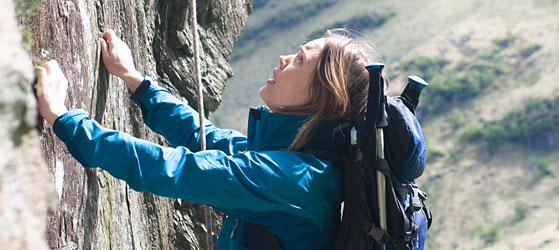
Most height-related movies do not so much fall into the horror genre. I even watched A Lonely Place to Die, anticipating to see horror with a heights element only to be disappointed when it dwindled more into a suspense thriller. However, the first half of the movie, where the characters discover a kidnapped girl while mountain climbing and are them hunted by her captors, was definitely more within the horror genre and did include heights. Somehow, a chase scene is just more exciting when it includes a sheer cliff.

a-lonely-place-to-die-still

Arachnophobia

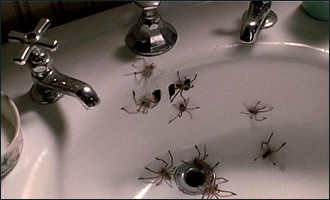
Well, hell, they made a movie by this title for a reason. Spiders creep me out, literally, with all their wriggly little legs and segmented bodies. When I lived in Tennessee (briefly), my partner and I once came across a spider that seemed nearly supernatural. This awful thing would climb up its web to drop down at you in assault. It would also attempt to swing in at us on the thin thread from which it dangled menacingly.  It seemed entirely immune to the barrage of poison my partner desperately sprayed on it. Picture, if you will, two full grown adults shrieking and carrying on at the mercy of this eight-legged demon. Terrifying. The spider finally did meet its end when my partner beat it to death very effectively with a shoe, yet that night haunts us both.

Arachnophobia was not a quality movie. It was actually pretty awful, as a horror movie and simply as a movie. Yet it still scared me. As a child, it pumped me full of a stream of nightmares; as an adult, it still crawls under my skin. It would just be another crappy movie if it did not hit so squarely on my real fear of spiders.

arachnophobia

Home Invasion

Like most women, I have been conditioned to fear and avoid home invasion. We close our blinds, lock our doors, vary our routines. All practices to avoid someone breaking into our home as we sleep. All people in our culture may not fear such an event, but surely we all work to avoid it. That is why there are locks on our doors and why alarm systems are so plentifully installed. I have more than once imagined hearing someone outside my window or been duped by a cat shifting in my house. The fear is triggered easily.

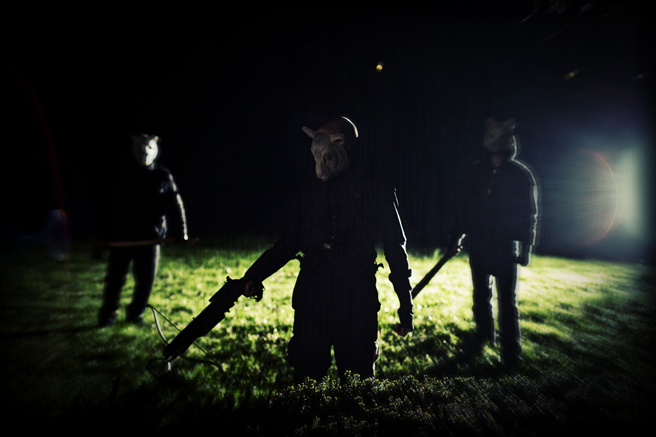
Home invasion has become its own subgenre in horror, most likely because it is such a widely established fear. It provides a large target audience. The most recent home invasion horror I saw was You’re Next, which I loved. It began on a normal home invasion premise, masked psychos breaking into homes and killing the residents; however, it then takes an unexpected divergence (no spoilers). The home invasion element did truly exploit my real fear of it until the movie transitioned away from it. Then I could appreciate the horror for unrelated quality.

youre-next-masks

Human Nature

I actually wrote my entire book (Savages) about the fear of human nature. The apocalypse subgenre of horror seems to be absolutely exploding these days, and every apocalyptic story ultimately ends up examining human nature, usually unfavorably. For myself, I fear the savages we are at heart and that would be exposed once all creature comforts and society were removed. The Walking Dead is no different with its slogan of Fight the Dead. Fear the Living. We all know what we have lurking deep down within us; it is terrifying to consider that actually being unleashed.

twd

What real life fear of you is amplified by a piece of horror?

I have a guilty pleasure: sexual tension and ill-fated romance in horror and apocalypse stories. So deep does my secret affinity run that it manifests as a major line in my own book (Savages). I simply cannot help myself.

Do not misread me; I am not looking for classic romance. I do not want a happy ending; I do not want courting or dating or any of that drama. Even if part of me is rooting for ultimate consummation or for the characters to end up together, I am always secretly satisfied when it goes so terribly awry. I think it is less about the actual romantic element and more about the juxtaposition of it within a terrifying or catastrophic scenario. It is normalcy in the traumatically abnormal.

Sexuality is also very primal, very base, which runs completely in line with survival, be it surviving a killer, the apocalypse, zombies, whatever. It seems appropriate to acknowledge and include that instinct while exploiting the others. It makes the scenario and the characters seem all the more real to us.

Humans are hooking up in every scenario; you cannot stop us. And when in real life does it ever play out like a romantic comedy? It is all the more accurate to be messy, ill-fated, or unrequited.

When I wrote my own book, the sexual tension between the characters is where the story began to blossom in my head. In a post-apocalyptic world slim on survivors, with all the normal world and distractions stripped away, I was able to concentrate on two elements: survival and her attraction to him. For me, the survival was the setting, and the attraction was the story.

And that is because of this guilty little pleasure I have. Clearly, however, I am not the only one, as this element does appear in horror and apocalypse stories.

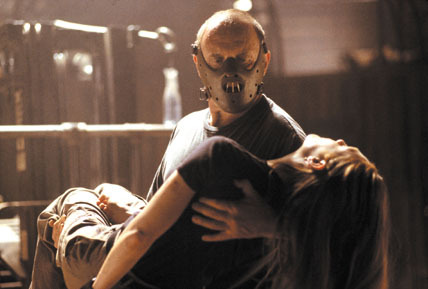
For horror, Hannibal Lecter and Clarice Starling immediately come to mind, whether in the novels or the movies. In Silence of the Lambs, Hannibal is clearly intrigued by Clarice and her intelligence, in a similar way he was by Will Graham in Red Dragon. In both instances, he wants to toy with the other while also teaching them, minimally helpful manipulation.

hannibalclarice

However, his interactions with Clarice take on that additional level of sexual tension. Hannibal is aroused by her vulnerability, hungry for her specific psychological damage and idiosyncrasies, a level he never achieved with Will. I think this sexual tension and Hannibal’s attraction to Clarice is what makes their dynamic so interesting and convincing.

By Hannibal, Hannibal’s romantic attraction is fully realized and no longer relegated to simple sexual tension in their interactions. In the movie, he sacrifices his hand to spare Clarice hers; in the book, he drugs her and spirits her away to live with him in the jungle. By this point, it got a little too romantically centered for me but was still enjoyable.
hannibalclarice2

The sexual tension in Silence of the Lambs was much more engaging and entertaining that the outright romantic pursuits of Hannibal, but throughout the franchise, that sexuality is a strong element between the characters and in the plot. Hannibal being my favorite fictional serial killer does not hurt either.

As far as apocalypse, (let’s go mainstream, why not?) The Walking Dead fully exploits the soap opera of human sexuality in a apocalypse survival scenario. The Walking Dead being such a sensation and its success bringing it so mainstream does always lead to more interpersonal drama, a tactic to entice outside the initial target audience. Yes, I have the zombie lovers, but if I have a little romance, let me hook those on the fence too.

The first instance of sexuality and romantic drama in The Walking Dead was the love triangle between Rick, Lori, and Shane. Rick wakes up to the zombie apocalypse and hunts down his family, only to find his wife entangled with (and impregnated by) his partner, Shane. Definitely soap opera worthy but enticing all the same. The scenario is also pretty realistic. If you thought your husband/partner was dead, would you not consider finding comfort with one another?

ricklorishane

The relationship between Glenn and Maggie is probably the longest and most explored in the series. They start as convenient fuck buddies on the farm (sex always happens during lulls in combat, right?) then develop into a full romantic relationship. They get separated and reunited; they make horrible and dangerous decisions based on their love for each other. Again, this crosses my unrequited, inappropriate romance line (for my own personal affinity); however, it is still very effective. It gets the audience invested in them, rooting for them (and hence hooked on the show).

glennmaggie

I, personally, think sexual tension and romance has a place in horror and apocalypse. It attracts my interest and also makes the scenarios and character seem more authentic to me. Even facing the end of the world, given a moment to breathe, I believe humans will continue to be sexually driven. Oh, it seems the zombies are gone for the moment; how about a roll around in an empty pharmacy?

However, I think the inclusion of this element must be applied properly. Too much or too idealistic and it violates the genre; too little and it is lost and its purpose is unrealized. It needs to augment the plot and play off of the survival scenario; if it takes over as the story, it becomes too much.

Hopefully I succeeded in doing just that in my own work.

Horror Threshold

Posted: June 24, 2014 in horror
Tags: , , ,

My horror threshold. I never actually gave it much thought. I have been infatuated with the horror genre since my teens, and I have seen (and sought out) some truly depraved media. The most disturbing movie I have ever seen (The Heart is Deceitful Above All Things) is not even what I would consider horror.

Yet an online associate told me about a movie (A Serbian Film) that I had never seen or heard of that got me thinking about what my horror threshold might be–where I would draw the line between horror as disturbing entertainment and legitimate, unappealing depravity.

This associate told me the movie included someone having sex with a newborn baby. Instantly, there was my threshold! For all the obscure, graphic, and mentally traumatizing horror I have sought out, I had absolutely no desire to see this movie. I did not even really want to think about the fact that it existed.

Children. Children are my personal horror threshold.

If there is a freaky possessed child or a stoic kid on a murderous rampage, I’m fine; I’m good with it; please continue… However, if the horror is directed at the child, particularly a baby, I’m out. I might be able to tolerate some light suggestion with no visual, but largely, I want no part of it.

Horror involving children is a biological aversion for me, even more so after I became a mother. I imagine it is for many people.

So that is my line. Horror threshold here!

I am also not exceptionally fond of rape horror. The inclusion in a plot or the suggestion of it does not necessarily bother me, even a brief scene. However, when the scene is gratuitously graphic or lengthy, I feel my threshold approaching.

When I foolishly watched the remake of Last House on the Left while I was in Iraq (worst venue choice on my part), the rape scene seemed neverending. Yet when I watched it later, it is not horrifically long or graphic for the genre. It stabbed at my legitimate fear of getting raped in theater.

Like children, graphic rape horror is biologically upsetting to me. I can tolerate rape horror to a higher degree because it involves adults, not children. In either case, not my first choice for trauma and fear. Give me a deeply psychological serial killer any day.

Everyone is different, so everyone’s horror thresholds are distinct, even for the most versed aficionados in the genre. I have written torture pieces that have upset my dearest friends; I have written pieces my own husband refuses to read.

So what is your horror threshold?

I remember when zombies were Romero. I remember when vampires were Anne Rice. I remember when werewolves were barely on the radar. Nothing sparkled in the sun; no tweens lusted over the dark creatures. I remember when being a horror lover made you a goth in high school or a gore whore as an adult.

This is no longer exactly true.

Pure and raw horror will never really be mainstream; that is part of what defines it as a genre. Deeply disturbing will never been normal because then, by definition, it cannot be disturbing. However, this diluted, stylized horror has seemed to take over recently.

zombies

The Walking Dead has turned zombies into an utter phenomena. Twilight has brought the screaming teenage masses to vampires and werewolves (if you can even call them that). Hannibal, and TV shows of the like, have brought gore to network television. Serial killers and supernatural creatures and blood are no longer in the shadows. It seems like they are everywhere now.

As long-standing horror lovers, this cultural development is a double-edged sword. On one side, what we love is saturating the market now, easily accessed and pursued. We can see new (and rather well done) stories of Hannibal Lecter or Norman Bates in shows airing weekly. We can find zombie clothes, backpacks, whatever in the mall rather than some obscure, overpriced store online. There are more horroresque movies than we have time to attend.

Yet, on the other side, the genre can seem tainted. A key component of horror is being outside the status quo, ripping out of the box to be upsetting or traumatizing. For horror to fit inside the mainstream, the mainstream has become more tolerant of violence and gore, more amiable to fear; however, horror has become more pretty and appealing in turn. To a degree, it has been neutered.

Personally, I love the cultural shift. And I hate it. I enjoy the influx of media in my particular twisted flavor while I lament the perversion of the perverted to something placid for the masses.

Love it and/or hate it, it is what it is. There will always be a place for pure horror on the outskirts of our culture; there will always be a line that the mainstream will be too scared to cross. Even if the majority has adopted the idea behind the genre, purists will be out there keeping the darkness black and frightful.

The apocalypse has gone mainstream. The end of the world manifested in a myriad of scenarios has infiltrated the many forms of the media—books, movies, cable and network television. Right now, it is simply everywhere.

Where zombies used to be at the fringe of horror, they are now their own genre and pop culture phenomena. Where you used to keep some bottled water and canned food in case of emergency, preparation and survivalism have become publicized arts.

This apocalyptic focus is a fascinating cultural fixation. For those of us who have been lurking in horror and the like for years, we now find our interests readily available and flourishing under all the attention. However, despite the avalanche of awareness, there seem to be some real life details that the apocalyptic media glosses over or neglects.

Some of the dirty details get left out. Mundane, daily concerns we would like to pretend we do not have to deal with. Those annoying little realities that will not just be alleviated by the end times. As a woman, three specific examples come immediately to mind.

#1 Periods. Menstruation is a reality most women cannot escape, no matter how much we may wish we could. How in the hell are these surviving women dealing with their periods? Clearly, they did not stop menstruating because a zombie ate their husband or the power suddenly went out. It is safe to assume tampons and pads would not be readily available, and even if they were, how much real estate could these women sacrifice in their nomadic bags to tote them around?

I cannot see any woman just bleeding down her leg (and have not seen it in any movie or show). Not to mention the sanitary considerations this would bring up, blood leaves a trail—both in sight and smell. In most cases, survivors are nomadic and often evading some form of threat. Whether that danger is zombies, other survivors, or (more mundanely) a bear, they would not want that pungent of a trace left leading right to them every 28 days.

Maybe they have gone colonial and are using folded pieces of cloth, if they could acquire enough cloth. However they are coping with the monthly, how are they disposing of the method? Bury it? Burn it? It could be any of the methods used to eliminate shit as a tracker, which I was made intimately familiar with from the stories of my coworkers in Iraq.

Whatever these women would have to do, no one is telling.

#2 Birth Control. This is not all that separate from menstruation. After all, pregnancy is a direct result of the same cycle. And by the same token as assuming tampons would quickly become scarce and nonexistent, condoms are probably not just lying around everywhere. The same would apply for birth control pills, and all medically administered methods (IUD, Depo-Provera, and the like) would naturally be gone with the doctors who would have provided them.

So birth control is out the window, beyond natural methods like pulling out or the “rhythm method” (neither highly effective). People are going to continue to have sex, apocalypse or not, maybe even more so in the face of their demise. Apocalyptic media surely includes plenty of sex between characters. Sometimes there is even pregnancy. However, it is rarely addressed how they would avoid getting pregnant.

Walking Dead did make an exception and included two instances of pregnancy tests miraculously spared and available being used. When Laurie finds out she is pregnant (with a child she eventually has) and when Maggie is confirming that she is not pregnant. Laurie’s pregnancy was a significant plot point, but Maggie’s test was merely a raw and real detail to thicken the authenticity of the show.

#3 Shaving. I will preface this one by acknowledging that Hollywood in particular has to make things pretty. Movies and television have an inescapable visual element. Just like there would no longer makeup or curling irons after the apocalypse yet the characters are still startlingly groomed and sexy; there would not be frequent showers or time with a razor. I understand why this particular aesthetic detail is purposefully ignored and contradicted.

Nonetheless, this applies to both men and women. If the story takes place two years, seven years, decades after the fall of civilization, why does everyone not look like Tarzan? Do they all have a razor and clippers packed efficiently with their magical tampons and birth control pills? When people are scrounging for food, it is very unlikely they are concerned with keeping their hair trimmed short and shaving their legs.

Not many people want to watch a movie with a zombie-slaughtering heroine with French plumes of armpit hair, yet that does not alter the reality of it. Hair will keep growing; women will continue to be fertile and still have their periods.

Shaving does not affect much from a survivalistic standpoint; what difference would it actually make as to whether a survivor makes it or not? A screaming newborn or a trail of blood, on the other hand, would impact the chances of surviving whatever apocalypse in which the character might be trudging. Pregnancy weakens the woman, limits her activity and possibly mobility or ability to flee. A baby makes very clear and constant noise. Blood leaves a trail to follow.

Maybe it does not matter. Maybe these details are deliberately omitted for entertainment value. That is perfectly reasonable, yet I cannot help but notice as I indulge from the buffet of apocalyptic media options.

The questions become:
Apocalyptic fans, would these details make the movies/TV shows/books more realistic or entertaining; are they necessary?
Preppers and survivalists, how would you deal with these realities after the world ended?